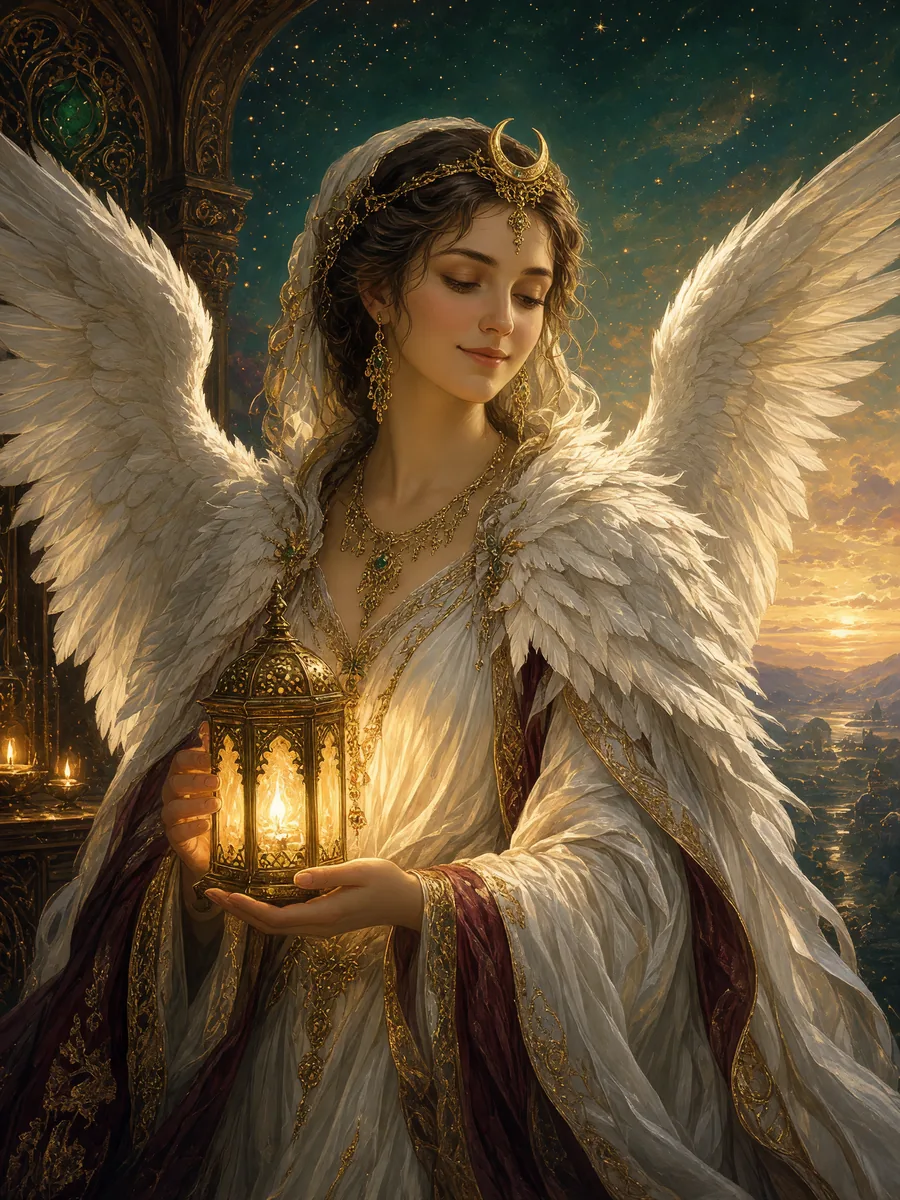
The mother who guards hearths, cradles and travelers. She appears to Aybars in the form of a white swan and gives him the road and the hearth ember.
- Guise
- A white swan
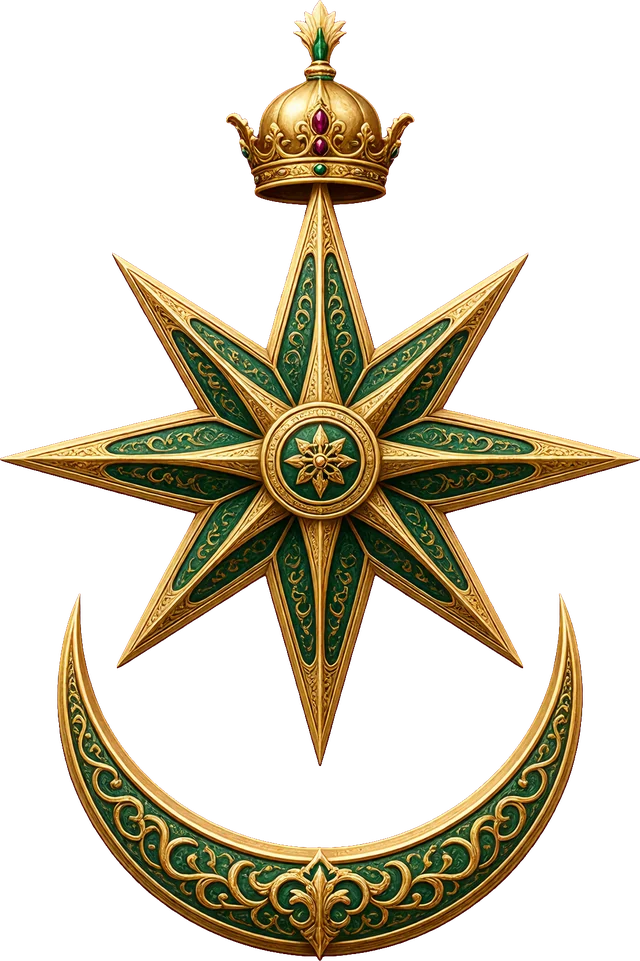
- Emblem
- The golden crescent on her brow; the hearth lantern in her hand
- Gift
- A hearth ember that warms only when more than one person sits beside it
- In the palace
- The crescent in the emblem is her crescent
- Mythological origin
- In Turkic mythology, protector of women, children and the hearth
Alone, everyone is a number. Side by side, they become a story.
Her place in mythology
In the old Turkic faith, Umay is the protector of birth, of abundance, of children and of the hearth. It was believed that she stood at the head of the baby in the cradle and held the hand of the woman giving birth. In most tellings she appears in the form of a bird. Even today, in many parts of Anatolia, her name is given to baby girls.
Her place in the story
On the night the Iron Stake wept, Umay Ana, Mother Umay, does not scatter shadows as Erlik does; she only takes the form of a white swan, flies north, and waits. For she knows: the stone can be found only by someone who knows, to the very depths, what loneliness is, and it can be carved only by someone who chooses to use it not for themselves, but for everyone.
She appears to Aybars above the Silent Lake. She tells him she has known him since childhood: as he listened to tales on the cook's knee, as he groomed horses beside the stableman. It is from her that we learn the stone is the tear of the Iron Stake, that it is to be carved not with iron but with patience, light and companionship, and that the road leads to the dome that imitates the sky.
When Erlik's shadow attacks, she raises her lantern, and the shadow melts in the light. As she leaves, she gives Aybars a hearth ember. It will prove a strange ember: kindled alone, it stays as dim as a candle flame; as each person sits beside it, it grows. The fire that frees the tulpar from the ice and the fire that melts the Black Winter are both kindled from this ember.
In the palace
On the night of the coronation she passes once over the courtyard and leaves one of her feathers in the branches of the walnut tree. Fatma Nine gives that feather to the palace midwives; ever since, a swan feather has hung above the cradle of every baby born in the palace.
The crescent in the North Sultan emblem is the crescent on her brow. Hasan Efendi explains it this way: "The crown is for the palace, the star for the road, and the crescent for protection."